From Basic Research to Biotech Innovation: Five Years of Proxygen and Solgate

In 2020, two biotech startups with roots at CeMM set out to turn academic discoveries into innovative drug discovery platforms. Five years later, Proxygen and Solgate have established themselves as promising players in the biotech landscape. In this joint interview of Bernd Boidol (Proxygen) and Ariel Bensimon (Solgate), the co-founders reflect on their journeys, challenges, and the crucial role of basic research.
Looking back at your founding vision, how has it evolved?
Boidol (Proxygen): Our vision was to transform a serendipitous discovery into a scalable platform for molecular glue degraders. Today, that platform has generated molecules advancing toward clinical testing — something we would not have imagined so quickly.
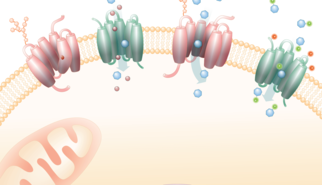
Bensimon (Solgate): We started by developing a technology platform for systematic drug discovery focused on solute carriers (SLCs). Over time, we moved from enabling discovery through technology to running our own therapeutic programs, by utilizing the technology for selected targets.
What are the milestones you’re most proud of since launching your company?
Boidol: There have been many, but a few truly stand out: Celebrating our five-year anniversary, forging partnerships with leading pharma companies, building a world-class scientific team, and advancing our lead program toward clinical testing — all milestones that show how an idea can become something tangible with potential impact for patients.
Bensimon: We often think of milestones as the first time we achieve a goal. But I find it exciting to look at the continuum of events: Building our outstanding team, scaling the technology into new assays, and developing the drug discovery programs. I am proud of every milestone, whether big or small, in our efforts here in Austria and in partnership with Curie.Bio.
What were the biggest challenges in the early years?
Bensimon: Financing and building an industry-ready team were key steps in our growth. We accomplished them thanks to long-term investors, experienced advisors, and strong academic support from the institutes and co-founders.
Boidol: Like any young company, challenges were countless. What made the difference was strong professional partnerships and trusted co-founders. Dividing responsibilities according to strengths turned difficulties into opportunities.
How did the academic environment shape your transition to entrepreneurship?
Boidol: Having access to the scientists who generated the original ideas, and their networks, was invaluable. Collaborating with academics driven by curiosity rather than profit often felt like reaching out to friends who genuinely wanted to help.
Bensimon: The academic environment at CeMM and ISTA was essential for our discoveries, risk-taking innovation, and inspiring young scientists to bring ideas into industry. It provided both the talent and enthusiasm to make a difference.
Why is basic research so important for biotech innovation?
Bensimon: Basic research is where discoveries and talent are nurtured. It provides the foundation to pursue bold questions and venture into unexplored areas.
Boidol: Without basic research, innovation would be reduced to incremental steps. Breakthroughs only come from fundamental science.
Does Austria provide the right ecosystem for academic spin-offs?
Boidol: Austria’s grant funding and tax incentives make it attractive for spin-offs. Improvements could include more standardized processes around IP and ownership, and easier recruitment of biotech talent through visas and tax advantages.
Bensimon: Yes, there is strong support from institutions and public agencies. Greater collaboration between academic institutions, rather than working in silos, would strengthen the ecosystem further.
What advice would you give researchers considering starting a startup?
Bensimon: If you believe your idea is worth turning into a business, just do it. Ask for help, choose the right partners, and if your are spinning out - ensure alignment with your academic institution.
Boidol: Go for it. You’ll learn more than in any other role. Stay humble in success and optimistic in setbacks.
Looking ahead, what does success mean to you?
Boidol: Science and markets are unpredictable, so flexibility is key. For us, success means pushing the boundaries of drug discovery with a motivated team.
Bensimon: In five years, success would mean a thriving business and leadership in our field, with technologies delivering therapeutic programs that will be developed into real benefits for patients.
###
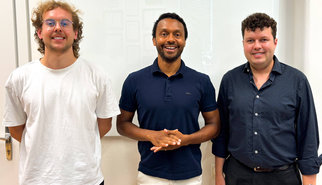
Bernd Boidol is Chief Executive Officer of Proxygen, a biotechnology company pioneering molecular glue degraders to drug previously inaccessible targets. With degrees in Molecular Biology and Business Administration and a PhD in Oncology, he combines scientific training with commercial expertise. Since taking on the CEO role in 2020, he has guided Proxygen into high-profile strategic partnerships with global pharmaceutical leaders, including Merck & Co. and Merck KGaA, while advancing the company’s proprietary discovery platform and internal pipeline toward clinical development. These achievements earned Proxygen recognition as one of Fierce Biotech’s “Fierce 15” companies in 2023. Before joining Proxygen, Dr. Boidol worked as a management consultant, helping pharmaceutical companies scale innovative business models around emerging therapeutic modalities. His leadership is defined by a commitment to scientific excellence, strong industry collaboration, and advancing next-generation medicines for patients with high unmet need. By bridging science and business, he has positioned Proxygen as a frontrunner in the rapidly evolving field of targeted protein degradation.
Matthias Brand is the co-founder and Chief Technology Officer of Proxygen, where he leads research and early discovery efforts for novel molecular glue degraders. With a PhD at CeMM under the mentorship of Georg Winter, Matthias specialized in designing scalable assays to identify novel E3 ligase modulators in and developing selective degraders. He previously studied medical and molecular biotechnology in Milan and Zurich, building a strong foundation in molecular biology and drug discovery. At Proxygen, Matthias has been instrumental in developing proprietary high-throughput platforms for discovering molecular glue degraders and in driving programs from early discovery toward the clinic. His leadership has helped establish Proxygen as a pioneer in the field, scaling an interdisciplinary team and forging high-impact partnerships, including a multibillion-dollar collaboration with Merck & Co. Committed to translating cutting-edge science into therapies, Matthias continues to drive innovation in targeted protein degradation to address the “undruggable” target space.
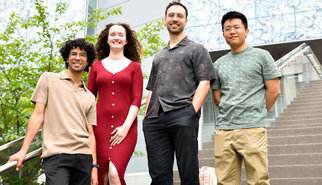
Ariel Bensimon is the Chief Executive Officer of Solgate, a biotechnology company focused on unlocking the therapeutic potential of solute carriers (SLCs). Ariel began his journey into translational science in late 2017 when he joined the laboratory of Giulio Superti-Furga at CeMM, where he investigated the role of understudied transporters in cellular metabolism. His research broke new ground by demonstrating that SLC transporters — historically considered highly challenging targets — could be modulated through targeted protein degradation, a high-risk but pioneering approach at the time. Ariel’s scientific achievements and vision for combining transporter biology with drug discovery led to the founding of Solgate together with Giulio Superti-Furga. Gaia Novarino, Stefan Kubicek and Georg Winter. Since then, he has guided the company’s growth, advanced its platform, and built lasting partnerships with investors and academic institutions. His approach blends scientific excellence with entrepreneurial vision, driving the translation of fundamental biology into transformative therapies envisioning to create a meaningful difference for patients worldwide.
Enrico Girardi is the Chief Scientific Officer at Solgate. Enrico holds a Ph.D. in biophysics from King's College London. He conducted postdoctoral research in structural biology at the La Jolla Institute for Immunology in the USA, and functional genomics of transporters at CeMM in Austria, where he was also involved in the IMI2 Resolute consortium application, a large public-private collaboration focused on human Solute Carriers (SLCs). While at CeMM, he designed and executed several large-scale functional genetics screens to systematically elucidate SLCs biological functions and their role in drug uptake. Before joining Solgate, Enrico worked as Principal Scientist at Boehringer Ingelheim, where he led a research group involved in multiple early-stage oncology drug discovery programs.
For more information about the companies, please visit
Share this article