Christoph Bock receives ERC Advanced Grant to engineer “living drugs” for cancer therapy

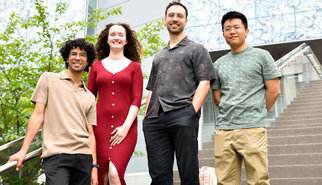
Christoph Bock, Principal Investigator at CeMM and Professor of Medical Informatics at the Medical University of Vienna, has been awarded an ERC Advanced Grant by the European Research Council (ERC). With €2.5 million in grant funding from the European Union, the Solid-CART project seeks to develop stronger and smarter CAR T cells as immunotherapy for solid tumors.
With this new grant, Christoph Bock has now received an ERC Starting, Consolidator, and Advanced Grant in direct succession – a rare and exceptional achievement. Supported by his previous ERC grants, Bock’s research group developed breakthrough technologies for genetic screening (including the CROP-seq method for high-content CRISPR screens) and advanced computational methods (including the CellWhisperer AI for chat-based analysis of single-cell data). Most recently, the team used CRISPR screening as a form of artificial evolution that makes CAR T cells more effective for the treatment of blood cancers – a discovery that is being prepared for clinical testing.
Building upon this prior work, the new ERC Advanced Grant tackles a harder challenge: making CAR T cells effective against solid tumors, which suppress the body’s immune response and can be hard to distinguish from healthy cells that must not be destroyed.
“Living drugs” for tumor therapy
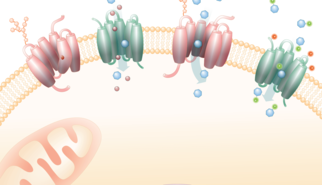
In CAR T cell therapy, the patient’s own immune cells are genetically engineered to recognize and kill cancer cells. These reprogrammed cells become “living drugs” and have demonstrated tremendous efficacy against certain blood cancers. However, CAR T cells have struggled against solid tumors – including lung, breast, and colon cancer, which are among the leading causes of cancer-related deaths in Europe.
Next-generation CAR T cell designs
One reason is that solid tumors are remarkably good at hiding and defending. They create a hostile environment that weakens attacking immune cells. Another reason is that most solid tumors lack markers that would clearly distinguish them from healthy cells, meaning that a CAR T cell runs the risk of causing extensive collateral damage.
The Solid-CART project tackles both challenges. It combines CRISPR screens with mouse tumor models that harbor a fully functional immune system, seeking to discover genetic boosters of CAR T cell function. It further employs AI-based design of regulatory DNA to develop “two-factor authentication” for CAR T cells, restricting their killing to the tumor and thereby reducing dose-limiting toxicities elsewhere in the body.
Biomedical research with clinical relevance
The project will focus on HER2-positive lung, breast, and colon tumors. These are major causes of cancer death and exemplify the challenges of CAR T cell therapy against solid tumors. Although these tumors express a well-known protein and drug target (HER2), current anti-HER2 therapies are often insufficient, and CAR T cells cause dose-limiting toxicities by attacking HER2-positive healthy cells elsewhere in the body.
Following initial discovery and testing in mouse models, the Solid-CART project will validate the most promising CAR T cell designs against human tumor cells and prepare them for future evaluation in first-in-human clinical trials. Clinical translation of the new CAR T cell therapies will be pursued in close collaboration with Antonia Müller, Professor of Cell Therapy at the Medical University of Vienna.
Advancing frontier research
ERC Advanced Grants are among the most prestigious and competitive funding schemes in Europe. They are awarded to established scientific leaders with exceptional track records and support high-risk, high-gain research that has the potential to transform entire fields. These grants provide researchers with the freedom and long-term support needed to tackle some of the most difficult scientific challenges.
For CeMM, the award represents further recognition of the institute’s commitment to frontier biomedical research and its mission to translate scientific discoveries into better medicine.
CeMM congratulates Christoph Bock on this remarkable achievement!
Related Files
Share this article