Tiny molecular rings open new ways for designing better medicines

A small change in a molecule can make a big difference in how it behaves in the human body. Researchers at the University of Vienna, CeMM Research Center for Molecular Medicine of the Austrian Academy of Sciences and the Medical University of Vienna have now developed a simple and versatile way to make so-called “aminocyclopropanes” – compounds based on tiny, triangular structures to fine-tune the properties of biologically active molecules and future drug candidates. Their new method, published in Angewandte Chemie (DOI: 10.1002/anie.8092854) not only circumvents several limitations of conventional approaches, but also makes it easier to harness these triangles.
Cyclopropanes are organic chemistry’s smallest rings. Three carbon atoms are joined in a triangle, creating a compact and unusually strained structure. Despite – or partly because of – this unusual geometry, cyclopropanes are found in many biologically active natural products and have important applications in medicines and drug discovery, from antidepressants to antibiotics and antiviral research.
Connect these carbon triangles to an amine, a functional group with a nitrogen at its center, and you get aminocyclopropanes. They are of particular interest in pharmaceutical research because they can be used to replace another substructure commonly found in drug molecules: α,α-gem-dimethylamines (compounds where the aminocyclopropane’s triangle is “opened” through one edge being disconnected).
Such molecular substitutes, that resemble an existing part of a drug but can alter important properties such as its biological activity and metabolic stability, are referred to as bioisosteres and have shown beneficial effects in countless cases.
A new method avoids old problems
Aminocyclopropanes are therefore attractive building blocks for drug discovery. But making them can be difficult: Established approaches can require highly reactive chemicals, metal reagents, multiple synthetic steps or starting materials that are themselves difficult to prepare; these routes also typically require strict air- and water-free set-ups. Additionally, such harsh conditions limit which other chemical groups can be present in a molecule during the reaction. This becomes particularly important in medicinal chemistry, where researchers often need to modify already complex molecules without disturbing the rest of their structure.
The research group of Nuno Maulide, Professor of Organic Synthesis at the University of Vienna and Adjunct Principal Investigator at CeMM, introduced a new method for producing aminocyclopropanes under exceptionally mild conditions: In a so-called “hydroaminoalkylation”, they used an easily accessible and bench-stable starting material known as a hemiaminal. For many substrates, simply dissolving this compound in the appropriate solvent is enough to initiate the reaction at room temperature – without the need to rigorously exclude air or moisture.
The researchers successfully produced aminocyclopropanes containing unprotected alcohol groups, carbonyl groups and phthalimides – all of which are functional groups that pose significant problems for established approaches. The method also worked on a structurally complex molecule derived from the hormone estrone. In one experiment, the reaction was scaled to over 1 gram in a single run while still providing an excellent 84% yield.
Simplicity, flexibility and application
The chemistry could also be performed with alkynes, extending the range of molecules that can be produced. And the researchers went a step further by developing a one-pot, three-component version of the reaction. Instead of preparing and isolating the key aforementioned hemiaminal separately, the necessary components can simply be brought together in a single process using cheap, commercially available starting materials.
For pharmaceutical research, such flexibility matters. Drug discovery often involves making and testing many closely related molecules. Synthetic methods that tolerate more chemical functionality can give scientists access to molecular structures that would otherwise be difficult or time-consuming, and therefore expensive, to explore.
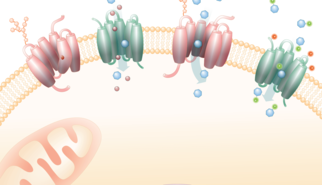
As a proof of concept, the researchers used their chemistry to prepare a close molecular relative of phentermine, an amphetamine-like stimulant known to interact with neurotransmitter transporters. Remarkably, replacing the aforementioned α,α-gem-dimethylamine, a small structural feature of phentermine, with a triangular cyclopropylamine retained activity at two important transporters while suppressing dopamine release through the dopamine transporter – a property that has been linked to a reduction of the risk of dependence.
Exploring new territory in search for new properties
“Not only could we show that such molecular triangles can be made quickly and easily using mild conditions, our work demonstrates how replacing one structural element with an aminocyclopropane can substantially alter a molecule’s biological behaviour without eliminating its desired activity. This makes the current study a very important milestone in this field”, Nuno Maulide, corresponding author of the study, summarizes the finding.
“Modern drug discovery is often about finding the right balance. A molecule may interact strongly with its intended biological target but also have unwanted properties”, says Konstantin Günther, co-first author of the study. “Medicinal chemists therefore need tools to make systematic structural changes and test whether they can retain useful effects while reducing undesirable ones.”
“Bioisosteres are an important part of that toolbox. They allow chemists to exchange one molecular feature for another that occupies similar chemical space but behaves differently in other regards”, Gwyndaf Oliver, also co-first author of the study elaborates. “The new research provides both a practical way to make aminocyclopropanes and an early demonstration of why scientists may want to make them.”
###
The Study “Synthesis of Aminocyclopropanes by Redox-Neutral Aminoalkylation” was published in Angewandte Chemie International Edition on 4 September 2026. DOI: 10.1002/anie.8092854
Funding: This work was funded by the European Research Council (ERC) and the Austrian Science Fund (FWF).
Related Files
Share this article