Mitochondria: when friends become enemies

A research group from MedUni Vienna and CeMM Research Center for Molecular Medicine of the Austrian Academy of Sciences has discovered a new mechanism by which cells communicate in inflammatory processes. This involves endogenous mitochondria released from white blood cells turning into initiators of inflammation. It is as if friends turn into enemies. The results have been published in the journal Circulation Research.
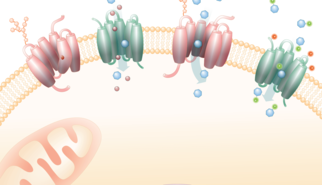
In collaboration with other partners, Christoph Binder from the Department of Laboratory Medicine of MedUni Vienna and CeMM, and his group members Taras Afonyushkin and Florian Puhm have investigated how monocytes (a subset of white blood cells) belonging to the immune system react under stress. Monocytes shed parts of their cell membrane in the form of so-called microvesicles. These microvesicles are capable of transmitting alarm signals to other cells. The scientists discovered that a subset of these microvesicles contains mitochondria. Normally mitochondria are an important component of cells and are known as cellular power plants. However, compared to conventional mitochondria, these mitochondria released by stressed monocytes have an increased potential to trigger inflammation.
There are two factors that render these monocytic "stressed mitochondria" dangerous. The tumour necrosis factor (a messenger molecule of the immune system) associated with them and modified mitochondrial RNA (ribonucleic acid). Via these two factors, "stressed mitochondria" trigger tumour necrosis factor and Type 1 interferon signaling pathways in recipient cells. Notably, these are two of the major signaling pathways in chronic inflammatory diseases.
"We were able to demonstrate that activated monocytes release certain stressed mitochondria, which - even in small quantities - trigger dangerous pro-inflammatory responses in recipient cells" explains Taras Afonyushkin, one of the study's first authors.
These findings give rise to two new potential therapeutic approaches. "On the one hand, one could specifically stimulate the immune system to enhance the clearance of these released mitochondria (e.g. by means of antibodies) and thereby diminish their activity in the blood," explains Christoph Binder, "on the other hand, a better understanding of the mechanisms leading to the release of these mitochondria could help to identify molecules that specifically prevent this."
The Study: “Mitochondria Are a subset of Extracellular Vesicles Released by Activated Monocytes and Induce Type I IFN and TNF Responses in Endothelial Cells” was published in Circulation Research in May 2019, DOI: 10.1161/CIRCRESAHA.118.314601
Authors: Florian Puhm*, Taras Afonyushkin*, Ulrike Resch, Georg Obermayer, Manfred Rohde, Thomas Penz, Michael Schuster, Gabriel Wagner, Andre F Rendeiro, Imene Melki, Christoph Kaun, Johann Wojta, Christoph Bock, Bernd Jilma, Nigel Mackman, Eric Boilard, and Christoph J Binder.
Funding: The study has been supported by the Special Research Program SFB-54 “InThro” of the Austrian Science Fund (FWF), the Doctoral Program CCHD “Cell Communication in Health and Disease” of the FWF, and the Christian-Doppler Laboratory for Innovative Therapy Approaches in Sepsis.
Related Links
Share this article