European alliance to advance proximity-induced drug modalities

In a now published Perspective in Molecular Cell (DOI: 10.1016/j.molcel.2025.07.018), scientists from six leading European research institutions, Goethe University Frankfurt, IRB Barcelona, CeMM and AITHYRA in Vienna, the University of Dundee, and EPFL Lausanne, propose the creation of a European Alliance to accelerate the development of proximity-induced drug modalities. These therapeutic approaches aim to harness the concept of bringing molecules into close proximity to target disease-relevant proteins, many of which are currently considered undruggable.
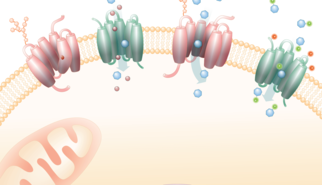
Proximity-inducing drug modalities, such as proteolysis-targeting chimeras (PROTACs) and molecular glue degraders, function by reprograming the cellular machinery to modify or eliminate disease-causing proteins. Originating from the concept of harnessing the cell’s own waste-disposal system to direct specific proteins toward degradation, these approaches have transformed the way scientists approach targeting disease mechanisms. Unlike traditional inhibitors, proximity-inducing drugs can remove entire proteins, and the concept has meanwhile expanded beyond degradation to the broader rewiring of cellular pathways.
In Austria, Georg Winter drives the development of this revolutionary class of drugs at CeMM and AITHYRA. His lab developed and applied methods for target protein degradation with the ultimate goal of understanding and disrupting oncogenic transcriptional circuits. The Winter lab has a strong focus on discovering principles of molecular glue degrader mechanisms by connecting high-throughput biology and biochemical reconstitutions with data science and AI. Moving ahead, his lab will additionally also focus on directly rewiring transcription factors—key regulators of gene activity that are typically inaccessible to conventional drugs and rarely considered therapeutic targets. Winter’s work on proximity-inducing pharmacologic strategies was supported by an ERC Starting and ERC Consolidator Grant (ongoing), and has been recognized by multiple international awards.
“Proximity inducing small molecules will allow us to rewire or reprogram a broad spectrum of cellular circuits that are misregulated in a variety of diseases,” Georg Winter explains. “among others, this pioneering strategy holds tremendous potential for rewriting the genetic program of cancer cells and opens new avenues for creating targeted therapies in the fight against cancer.”
Promise for treatment of undruggable diseases
The now published Perspective outlines recent scientific breakthroughs, including the evolution of PROTACs from concept to clinic, rational design of molecular glues, and novel strategies to redirect cellular degradation machinery. It also discusses how AI and machine learning have the potential to transform and accelerate discoveries in this field. Proximity-induced drugs can address biological targets that are inaccessible to conventional inhibitors and hold promise for the treatment of a range of “undruggable” diseases.
The authors of this article, Ivan Đikić, Cristina Mayor-Ruiz, Georg Winter, Kerstin Koch, Alessio Ciulli, and Nicolas Thomä emphasize the foundational role of academia in advancing this field and call for tighter academic-industry collaboration to unlock its full therapeutic potential. Their research centres in Vienna, Dundee, Barcelona, Frankfurt, and Lausanne have built complementary expertise in medicinal chemistry, structural biology, biophysics, cell biology and computational methods. Although collaborations already exist, they are often limited in scope and duration.
Public and private funding needed
The proposed European Alliance aims to pool expertise, infrastructure, and digital platforms across Europe. It would facilitate access to and coordinate the benchmarking of technologies, improve the integration of laboratory-driven and computational discovery approaches, and develop in vivo models to address delivery and safety challenges. The authors propose to seek both public and private funding to connect existing European hubs with international partners, including pharmaceutical companies, biotechnology firms, and technology developers.
“Europe has a unique opportunity to bring together the creativity of academic research, the precision of innovative methods, and the experience of industry,” says Georg Winter. “By joining forces in a dedicated alliance, we can build the structures needed to turn emerging scientific ideas into real therapeutic advances more rapidly.”
Related Files
Share this article