Andrew Sasmita joins CeMM as Principal Investigator

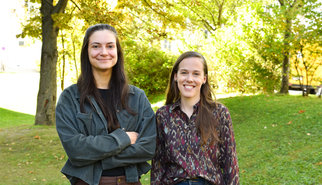
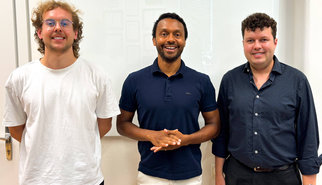
CeMM welcomes Andrew Octavian Sasmita, who will officially join CeMM as a new Principal Investigator in February 2027. Their lab will explore the gut–brain axis and glial biology in neurodegeneration, focusing on how interactions between the brain, gut, and immune system contribute to Alzheimer's disease and the role of glial cells and disease-associated proteins in these processes. Sasmita’s new research group will further strengthen CeMM's research focus on aging by exploring the complex communication between the nervous system and peripheral organs.
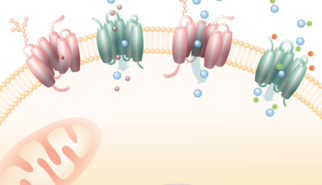
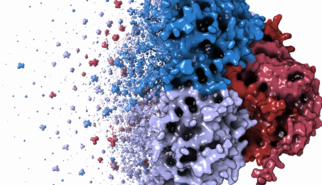
Alzheimer's disease has traditionally been viewed primarily as a disorder of neurons in the brain. However, growing evidence suggests that other cell types and organs outside the central nervous system also play important roles in disease development and progression. The Sasmita Lab aims to understand how amyloid-β (Aβ), a protein closely associated with Alzheimer's pathology, is released and transported within and beyond the nervous system, and how it may affect peripheral tissues, particularly the gut.
"Alzheimer's disease is not just a disease of neurons or even of the brain alone. We want to understand how pathological processes in the nervous system influence other organs, and how these interactions may, in turn, contribute to neurodegeneration," says Andrew Sasmita. "By bringing together glial biology and gut–brain axis research, we hope to uncover new mechanisms that could ultimately help preserve brain health."
Using experimental models, high-resolution microscopy, and multiomics approaches, Sasmita’s group will investigate how Aβ influences interactions between neurons, glial cells, and immune cells. A particular focus will be on whether brain-derived Aβ contributes to inflammation in the gut and disrupts communication between the gut and the brain. These insights could open new avenues for understanding and potentially slowing neurodegenerative disease progression.
"Andrew's research brings an exciting new perspective to CeMM by connecting neuroscience, immunology, and the biology of the gut–brain axis," says Maria Rescigno, Scientific Director of CeMM. “Understanding how the nervous system communicates with the immune system and peripheral organs is highly relevant to our research priorities in aging. Andrew's interdisciplinary approach will help us explore these connections and uncover new mechanisms of disease.”
From glial biology to the gut–brain axis
Originally from Indonesia, Andrew Octavian Sasmita obtained a BSc in Medical Biotechnology from the International Medical University in Malaysia. They completed their MSc and PhD at the Max Planck Institute for Multidisciplinary Sciences in Göttingen, Germany, under the supervision of Klaus-Armin Nave. Their research demonstrated that dysfunctional myelin can exacerbate amyloid plaque pathology and that oligodendrocytes, the myelin-producing glial cells of the central nervous system, also contribute to Aβ production.
Sasmita subsequently received a Walter Benjamin postdoctoral fellowship at University College Cork and APC Microbiome Ireland, where they worked with Yvonne Nolan, Olivia O'Leary, and John Cryan. Their research focused on the role of the gut microbiome in Alzheimer's disease, including sex differences in disease pathology and behavior, as well as the influence of exercise and neuroinflammation.
At CeMM, Sasmita will combine these areas of expertise to investigate how pathological proteins and neuroimmune interactions connect the brain with peripheral organs, advancing a more integrated understanding of neurodegeneration.
Share this article