


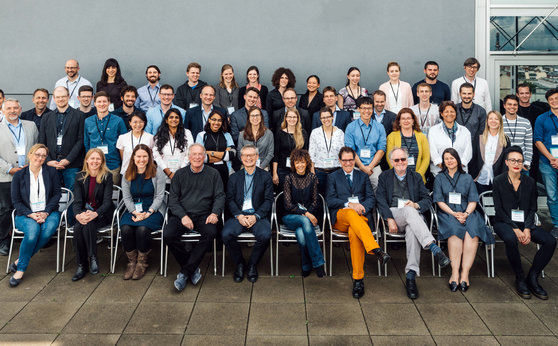
CeMM Scientific Advisory Board Meeting 2019
We thank the Scientific Advisory Board (SAB) Members Carl-Henrik Heldin (Uppsala University and Chairman of the Board of the Nobel Foundation), Emmanuelle Charpentier (MPI Berlin), Janet Kelso (MPI Leipzig), Hidde Ploegh (Harvard University) and Richard Flavell (Yale University) for visiting CeMM, the Research Center for Molecular Medicine of the Austrian Academy of Sciences from May 19-22, 2019, for listening to more than 30 talks, and for their…
Withering Away: How Viral Infection Leads to Cachexia
Cachexia is a multifactorial syndrome that occurs in patients suffering from chronic infections such as HIV, tuberculosis and malaria. In addition, 50% to 80% of cancer patients are affected by cachexia (Argiles JM et al. Nature Reviews Cancer 2014). Due to reduced food intake and altered metabolism, patients unintentionally lose body weight and lose their strength. Their fat reserves and skeletal muscle mass are progressively depleted, which…
New IDK Board of ÖAW
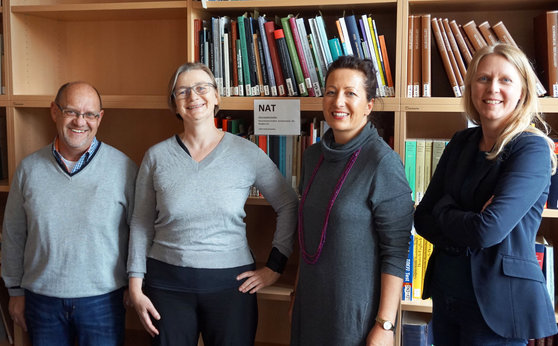
The conference of the 28 institute directors (Institutsdirektorenkonferenz, IDK) of the Austrian Academy of Sciences (ÖAW) have elected their new board members for the next 2 years (May 15, 2019 to May 15, 2021). The IDK advises on common concerns of the ÖAW institutes and assists the Academy with its planning. Barbara Horejs (Chair), OREA Jürgen Eckert (Vice-Chair), ESI Brigit Kellner, IKGA Anita Ender, CeMM The Austrian Academy of Sciences…
New immunotherapy targets for MPN patients
Myeloproliferative neoplasms (MPNs) are blood cancers characterized by excessive blood cell production, frequent thrombosis and transformation to acute leukemia. Oncogenic mutations in the JAK2, CALR and MPL genes have been identified as drivers of the disease along with many other MPN-associated mutations. While detailed knowledge of disease mechanisms is available, stem cell transplantation is still the only curative treatment but only for a…
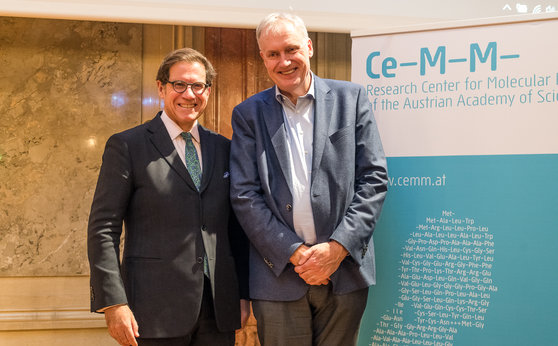
13th CeMM Landsteiner Lecture by Luke O'Neill
On May 6, 2019, some 350 participants enjoyed the inspiring as well as entertaining 13th CeMM Karl Landsteiner Lecture, delivered by Luke O´Neill, Chair of Biochemistry at Trinity College Dublin. In his talk “Will we cure all diseases by targeting Inflammation?” which addressed scientists as well as lay people, Professor Luke O´Neill pointed out the desperate need for new treatments for important diseases. 7,000 distinct diseases are currently…
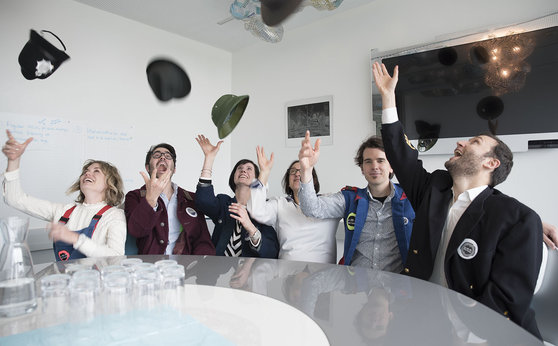
CeMM Alumni Kick-Off Event
Thank you to the participants of the Alumni Kick-Off Event, who joined the treasure hunt and the dinner on Sunday, May 5, despite the cold and rainy weather. We hope you had a good time, solving the criminal case around the disappearance of our Scientific Director, and also thank the cast of the company www.nesterval.at for their great performance and the team of www.stiftstpeter.at/ for the nice hospitality. On Monday, May 6, our exchange with…
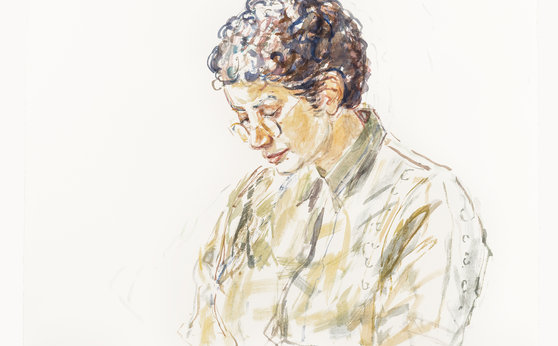
PhD Thesis Award in memory of Denise P. Barlow
CeMM, IMP, IMBA and MFPL hereby launch a PhD Thesis Award in memory of our former colleague and formidable researcher Denise P. Barlow. Denise P. Barlow (1950-2017) has been an excellent researcher who inspired the molecular biology community in Austria and beyond. In Vienna, she has been associated with four institutions: IMP, where she was a group leader, MFPL, where she has been a professor, IMBA, which has provided laboratory space for some…
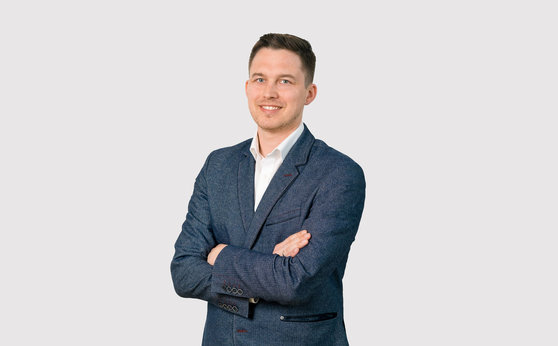
CeMM PI Georg Winter wins Eppendorf Award for Young European Investigators 2019
An independent jury chaired by Reinhard Jahn, Director of the Max Planck Institute for Biophysical Chemistry in Göttingen, selected and announced CeMM Principal Investigator Georg Winter as the 2019 winner of the Eppendorf Award for Young European Investigators. Congratulations to Georg! Georg Winter receives the prize for his pioneering work developing a method for targeting specific proteins for degradation. The award ceremony will take place…
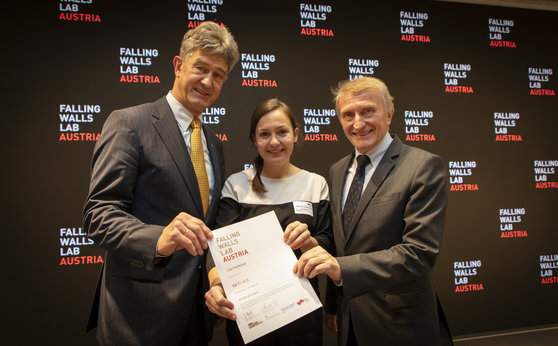
Julia Pazmandi, Winner of Falling Walls Lab Austria Competition 2019
Congratulations to Julia Pazmandi, CeMM and LBI-RUD PhD Student at Kaan Boztug’s laboratory, for winning the Falling Walls Lab Austria competition with her talk “Breaking the Wall of Science and Fiction”, a project in collaboration with CeMM’s VR Holodeck platform. The virtual reality (VR) platform devised and constructed in Jörg Menche´s group at CeMM, the Research Center for Molecular Medicine of the Austrian Academy of Sciences, allows…
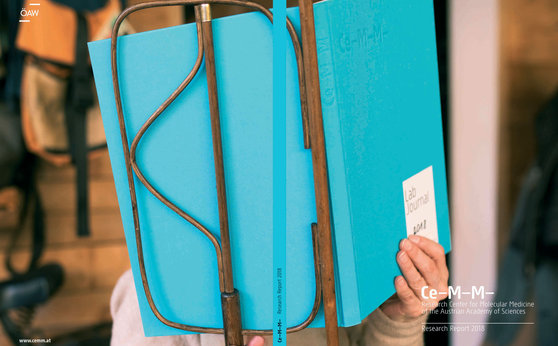
CeMM Research Report 2018
We are happy to introduce the CeMM Research Report 2018 to you. Learn more about the Science, Life and Facts of CeMM, the Research Center for Molecular Medicine of the Austrian Academy of Sciences. In this report we not only present you our scientific highlights, we took the discussions of the Directors, CeMM Principal Investigators and our Adjunct PIs outside of CeMM into the city of Vienna. We hope you enjoy the little tour of “CeMM-related”…
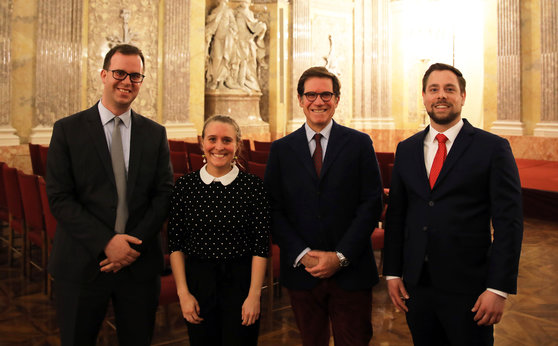
Johann Wilhelm Ritter von Mannagetta Awards
Congratulations to Kaan Boztug (CCRI and LBI-RUD Director, CeMM Adjunct PI and Associate MedUni Wien Professor), Elisabeth Salzer and Bernd Boidol (former CeMM PhD Students) for winning three individual Johann Wilhelm Ritter von Mannagetta Awards! Kaan received the Mannagetta Medicine Prize as recognition for his research on inherited defects of the immune system, and Lisi and Bernd the Mannagetta Advancement Awards for their excellent…
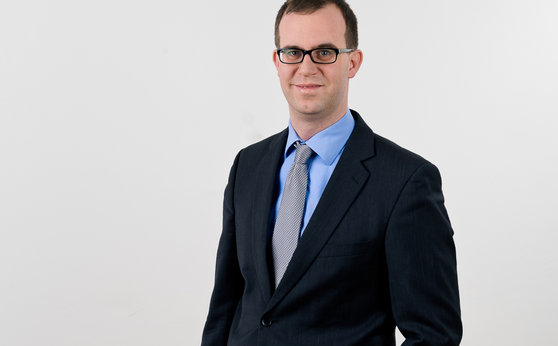
CeMM congratulates the Children's Cancer Research Institute (CCRI) to its new Scientific Director Kaan Boztug
On March 7, the CCRI announced that Kaan Boztug took over his new role as Scientific Director of the Children's Cancer Research Institute. As physician-scientist and leading expert in primary immunodeficiency and hematological malignancies, Kaan is a perfect choice for the directorship of this renowned research institution in paediatric oncology and we hope that his appointment will further strengthen the links between our organizations. Kaan…
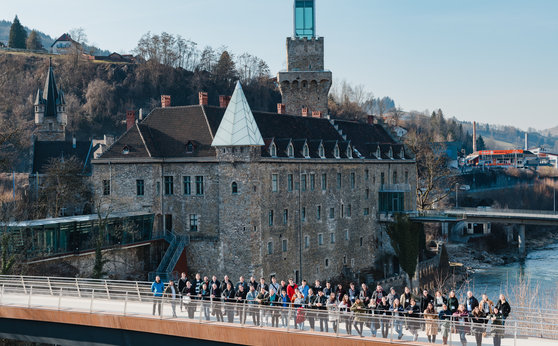
CeMM Scientific Recess 2019
From February 18-20, 2019, the annual Scientific Recess of CeMM with representatives from each research group and our facilities took place in Waidhofen a.d. Ybbs. Thank you to the organizers Andreas Villunger and Christoph Binder and to all the participants from CeMM and the Adjunct groups, who contributed with their presentations of new ideas and with lively discussions to a successful meeting. The overall topic of the 2019 recess was to…
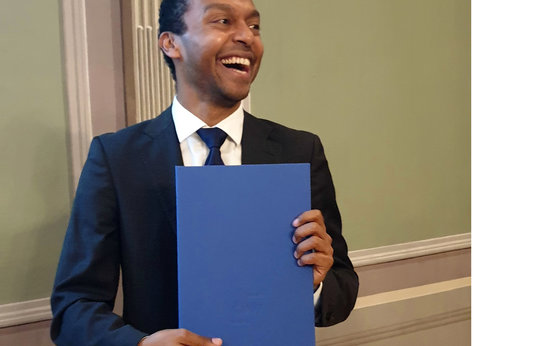
Ignaz L. Lieben Award for CeMM Adjunct PI Nuno Maulide
Congratulations to Nuno Maulide, Professor for Organic Synthesis at the University of Vienna, Corresponding Member of the Austrian Academy of Sciences, and CeMM Adjunct Principal Investigator, for receiving the Ignaz L. Lieben Award of the Austrian Academy of Sciences! As a scientist with a broadly documented expertise in state-of-the-art innovations in organic synthesis, and a great talent and dedication for science communication and teaching,…
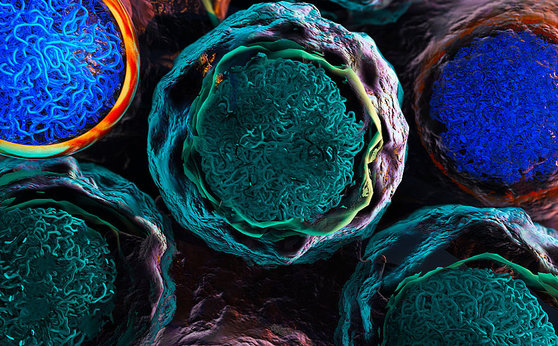
Finding second hits to knock out leukemia
Targeted drugs are a cornerstone of personalized medicine, yet come with important drawbacks. They restrain disease progression – but rarely eradicate the cancer. Patients therefore need to take the drugs essentially forever, exposing them to severe side effects and incurring high costs for the healthcare system. Combination therapies could potentially overcome these limitations. A study by scientists from CeMM, the Research Center for Molecular…
