


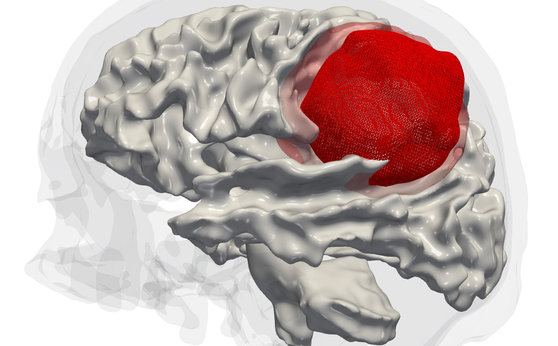
Epigenetic analysis of aggressive brain tumors
Glioblastoma is a brain cancer with devastating prognosis. A new collaborative study by scientists from CeMM, MedUni Vienna and the Austrian Brain Tumor Registry network demonstrates how epigenetic analysis of tumor samples collected in routine clinical practice could be used to better classify and treat the disease. The results were published in Nature Medicine. Glioblastoma is an aggressive brain cancer with a high degree of molecular…
Adjunct Principal Investigator Positions at LBI-RUD and CeMM, Vienna (NEW APPLICATION DEADLINE!)
Thank you for the interest and applications! We will contact the candidates asap. CeMM and LBI-RUD plan to invite several candidates to a hearing, which will take place in the last week of September 2018. Adjunct Principal Investigator Positions at LBI-RUD and CeMM, ViennaStarting or consolidated level to begin in 2018/2019 CeMM, the Research Center for Molecular Medicine of the Austrian Academy of Sciences and LBI-RUD, the Ludwig Boltzmann…
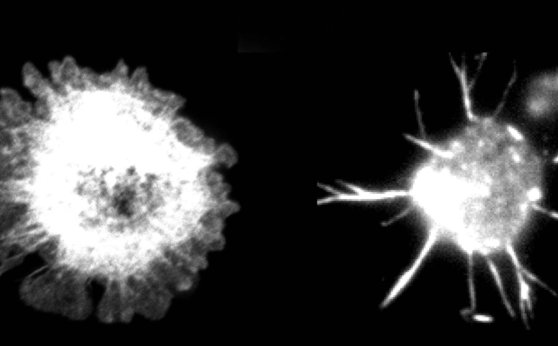
Faulty cytoskeleton impairs immune cells
The rearrangement of the cell´s inner scaffold, the cytoskeleton, is a vital process for immune cells. In a new collaborative study, led by scientists from LBI-RUD/CeMM, a rare inherited disease revealed a hitherto unknown role of a cytoskeleton-regulating factor for the proper functioning of the adaptive immune system. The study was published in the Journal of Allergy and Clinical Immunology. In order to move, a body needs a strong scaffold.…

Rare disease reveals crucial factor for fat digestion
Patients with congenital diarrheal disorders, a group of rare inherited diseases with largely unknown mechanisms, suffer from severe to life-threatening diarrhea and nutrient malabsorption from birth. Using state-of-the-art genetic and molecular biology analysis methods involving the revolutionary gut organoid technology, researchers from the LBI-RUD and CeMM, together with the Medical University of Innsbruck and University Medical Center Utrecht…

RESOLUTE: 13 academic and industry partners join forces to unlock the solute carrier class of transporters for effective new therapies
RESOLUTE (Research empowerment on solute carriers), a public-private research partnership supported by the Innovative Medicines Initiative (IMI) with 13 partners from academia and industry, announced the start of a 5-year research project on July 1, 2018. The goal of the project is to intensify worldwide research on solute carriers (SLCs), a relatively understudied group of proteins that control essential physiological functions, and potentially…

EU-LIFE urges the European Parliament and the EU Council to push for a strong Horizon Europe
EU-LIFE, the alliance of 13 leading life science research institutes in Europe announced its reaction to the European Commission´s proposal for Horizon Europe, the next Framework Programme for Research and Innovation (FP9) that will run from 2021 to 2027. The key points are as follows: • EU-LIFE urges the European Parliament and the EU Council to push for a stronger Horizon Europe by raising its budget as recommended by several…

Protective Mechanism against Atherosclerosis Discovered
Immune cells promoting inflammation play a crucial role in the development of atherosclerosis. Scientists at CeMM and the Medical University of Vienna in collaboration with the University of Cambridge showed that a survival factor for those cells has also anti-inflammatory functions and a protective role in atherosclerosis. The study, published in Circulation, provides valuable new insight for atherosclerosis research and suggests a hitherto…

Artificial gene defect reveals target to fight genetic disease
Fanconi anemia (FA), a rare, inherited disease, is caused by defective genes for DNA-repair in the cells of the patient leading to bone marrow failure, developmental abnormalities and increased cancer risk. Using genome-wide genetic approaches, researchers at CeMM systematically screened for the loss of an additional gene that could rescue the disease – and found it. The corresponding protein turned out to be a potential target that could be…

A New Achilles’ Heel of Blood Cancer
Acute Myeloid Leukemia (AML) is an aggressive form of blood cancer that frequently develops in children. The diseased cells often carry mutated forms of a specific gene, which is known to function within large protein networks. Researchers at CeMM and LBI-CR identified a protein of this network crucial for the survival of the cancer cells – a novel potential approach for targeted therapies. The study was published in Nature Communications. AML…

How immune cells kill bacteria with acid
The first line of immune defense against invading pathogens like bacteria are macrophages, immune cells that engulf every foreign object that crosses their way and kill it with acid, in a process called phagocytosis. In their quest to systematically study proteins that transport chemicals across cellular membranes, researchers at CeMM characterized the critical role for transporter SLC4A7 in this process, providing valuable new insights for many…

CeMM Landsteiner Lecture 2018 with Yasmine Belkaid
At the 12th CeMM Landsteiner Lecture, held by Yasmine Belkaid, Director of the NIH Center for Human Immunology and Director of the NIAID Microbiome Program, everything revolved around one of the most important emerging fields of research in life sciences: the microbiome. Yasmine Belkaid explained how microorganisms living in and on our bodies influence every aspect of our immune system, and why research in this field will change the medicine of…

Tracing the footprints of a tumor: genomic “scars” allow cancer profiling
DNA mutations driving cancer development are caused by different mechanisms, each of them leaving behind specific patterns, or “scars” in the genome. Using CRISPR-Cas9 technology, researchers at CeMM and the Wellcome Trust Sanger Institute at Cambridge, UK were able to show for the first time in cell culture that specific genetic alterations indeed lead to the predicted pattern of mutational signatures observed in human cancers. The results were…

“Livable Cities for the 21st century” - 8th CeMM S.M.A.R.T. Lecture with Jan Gehl
The 8th CeMM S.M.A.R.T. Lecture held by architect and urban design consultant Jan Gehl was exceptionally entertaining and inspiring. It illustrated with many captivating examples the problems cities developed in the 20th century by pursuing an object- instead of a people-centered city planning and how simple measures can make cities livable. “We knew more about the natural habitat of the mountain gorilla or the Siberian tiger than about the Homo…

How a virus becomes chronic
Lymphocytic choriomeningitis virus (LCMV) served as an indispensable model system for chronic viral infections over the last 80 years; two Nobel prizes were awarded for its exploration. However, the molecular interactions during the life cycle of the virus were hitherto poorly understood. In a new study, published in PLOS Pathogens, CeMM scientists revealed the comprehensive set of cellular proteins that physically interact with the LCMV…

Promotion sub auspiciis praesidentis of Barbara Mair
We congratulate Barbara Mair to the highest possible honor for achievements in university studies - the promotion sub auspiciis praesidentis rei publicae, Alexander Van der Bellen. The ceremony was held in the Van Swieten Hall of the Medical University of Vienna. Straight A´s from high school until the end of the doctorate, graduation within a given time scale, accompanied by exemplary moral character – in order to qualify for the honor of a…
