


Allergic immune responses help fight bacterial infections
Researchers from CeMM Research Center of Molecular Medicine of the Austrian Academy of Sciences, the Medical University of Vienna and Stanford University School of Medicine, have found that a module of the immune system, which is best known for causing allergic reactions, plays a key role in acquiring host defense against infections triggered by the bacterium Staphylococcus aureus. This “allergy module”, constituted by mast cells and…
Solgate GmbH – a new spin-off company to develop drugs against solute carrier (SLC) proteins
The most direct and efficient way to modulate metabolism is regulating access to nutrients, building blocks and energy through interfering with the function of membrane transporters. Solgate GmbH will develop drugs against solute carrier (SLC) proteins, the largest family of transporters, focusing on the important roles of SLCs in neurological diseases, metabolic disorders and cancer. Through a proprietary discovery platform that combines several…

Jörg Menche becomes Professor at Max Perutz Labs and University of Vienna, and CeMM Adjunct Principal Investigator
On 1 September 2020, Jörg Menche and his team members joined the Institute of Mathematics of the University of Vienna, and the Department of Structural and Computational Biology at the Max Perutz Labs, a joint venture between University of Vienna and the Medical University of Vienna. After 5 successful years as PI at CeMM, Jörg will now become a CeMM Adjunct Principal Investigator. Jörg Menche studied physics in Leipzig, Recife and Berlin.…

New EU-funded Research Project “HCA|Organoid”: Toward a Single-Cell Atlas of Human Organoids for Biomedical Research
The HCA|Organoid project is one of six pilot actions funded by the European Commission to contribute to the worldwide Human Cell Atlas initiative An “Organoid Cell Atlas” will combine single-cell profiling and organoid technology HCA|Organoid is a new EU research project that combines single-cell profiling and organoid technology to validate organoids as faithful models of human biology. The project seeks to kickstart the development of an…
Deep learning on cell signaling networks establishes interpretable AI for single-cell biology
Researchers at CeMM, the Research Center for Molecular Medicine of the Austrian Academy of Sciences, have developed knowledge-primed neural networks (KPNNs), a new method that combines the power of deep learning with the interpretability of biological network models. KPNNs learn multiple layers of protein signaling and gene regulation from single-cell RNA-seq data, thereby providing a much-needed boost in our ability to convert massive…

Drug discovery: First rational strategy to find molecular glue degraders
Targeted protein degradation (TPD) represents a novel paradigm in drug discovery that could lead to more efficient medicines to treat diseases such as cancer. “Molecular glue degraders” are an emerging but understudied class of small molecules that have been shown to induce degradation of proteins commonly considered “undruggable”. Researchers at CeMM, the Research Center for Molecular Medicine of the Austrian Academy of Sciences, have described…
Smart structures: Structural cells of the body control immune function
The human body is often seen as a “machine” that consists of specialized components: Bones and soft tissue provide structure, organs contribute physiological functions, and immune cells protect against pathogens. In reality, many cell types and organs may play more than one role. Researchers at CeMM, the Research Center for Molecular Medicine of the Austrian Academy of Sciences, have now discovered a striking example of multi-tasking cells. In a…

4th RESOLUTE Consortium Meeting (29-30 June 2020)
RESOLUTE, a public-private partnership funded by the Innovative Medicines Initiative (IMI) and coordinated by CeMM and Pfizer, has recently reached its second year’s milestone on working towards the advancement of basic research on Solute Carrier Transporters. On 29-30 June 2020, the 4th RESOLUTE consortium meeting, initially to be hosted by Sanofi in Paris (France), took place virtually. More than 60 RESOLUTE members joined a “virtual tour” of…
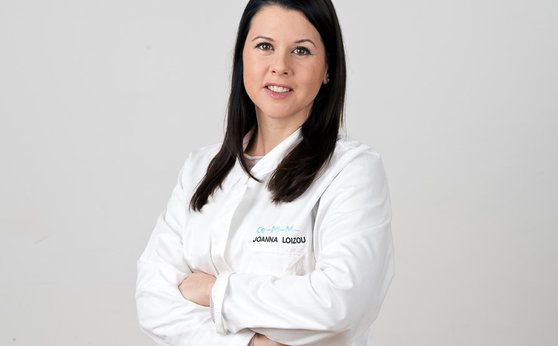
Joanna Loizou becomes Group Leader at the Institute of Cancer Research at MedUni Vienna, and CeMM Adjunct Principal Investigator
In June 2020, Joanna Loizou and her team members moved to the Medical University of Vienna to join the Institute of Cancer Research. Joanna will now become an Adjunct Principal Investigator at CeMM. Joanna Loizou’s long-standing expertise is embedded in investigating the cellular pathways that respond to DNA damage, to maintain genome stability and suppress disease. Her important contributions within this field began during her PhD (2000-2004,…
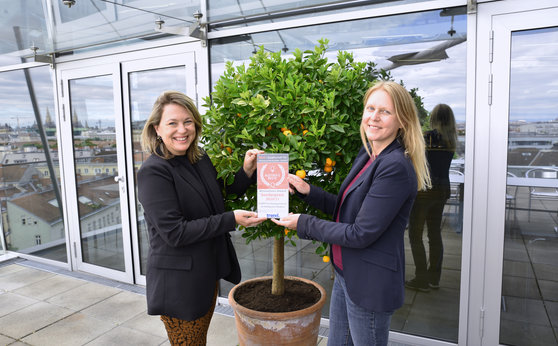
CeMM receives the special prize of the Austrian “Innovation Awards 2020/2021” in organic chemistry
On 19 June 2020, the “Innovation Awards 2020-2021 / Austria’s Beste” were announced by the Austrian Association for Consumer Studies (ÖGVS) and the business magazine Trend, in their special issue Top 500. CeMM, the Research Center for Molecular Medicine of the Austrian Academy of Sciences has been awarded with the “Special Prize/Sonderpreis” in the field of organic chemistry and obtained the second-best place in IP category Biochemistry. This…
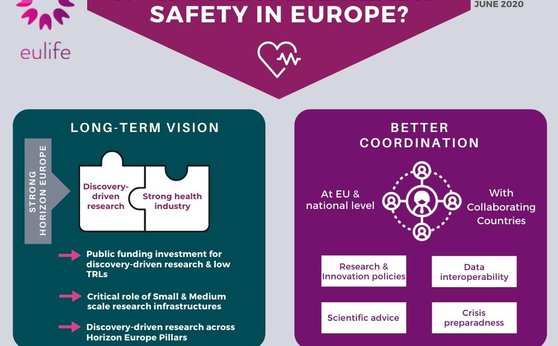
How to ensure health safety in Europe? The vision of the EU-LIFE Research Institutes
<link https://eu-life.eu/ _blank external-link-new-window "Opens internal link in current window">EU-LIFE</link>, the alliance of 14 leading Life Science Research Institutes in Europe announces its vision based on the lessons learned by COVID-19 pandemics on how Europe can prepare for future health crisis. The current COVID-19 pandemic dramatically highlighted how vulnerable Europe is regarding health safety. The health and wellbeing of European…
CeMM study reveals how a master regulator of gene transcription operates
The human Mediator complex is selectively required for cell-type-specifying transcription Using targeted protein degradation technology, researchers at CeMM, the Research Center for Molecular Medicine of the Austrian Academy of Sciences, set out to understand the primary role of a key regulator of transcription, the human Mediator complex. Mediator, a 30 subunit molecular machine, was thus far positioned as a factor that is generally required…
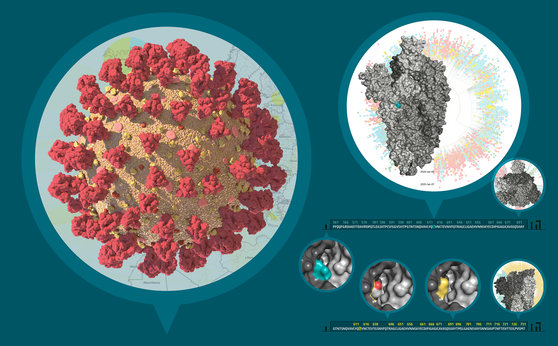
Release of over 200 new SARS-CoV-2 genomes provides unprecedented insights into transmission clusters in Austria
216 SARS-CoV-2 genome sequences have now been completed and released in the framework of the “Mutational Dynamics of SARS-CoV-2 in Austria” project from CeMM, the Research Center for Molecular Medicine of the Austrian Academy of Sciences, in close collaboration with the Medical University of Vienna, the Medical University of Innsbruck and the Austrian Agency for Health and Food Safety (AGES). This data represents another milestone in the project…
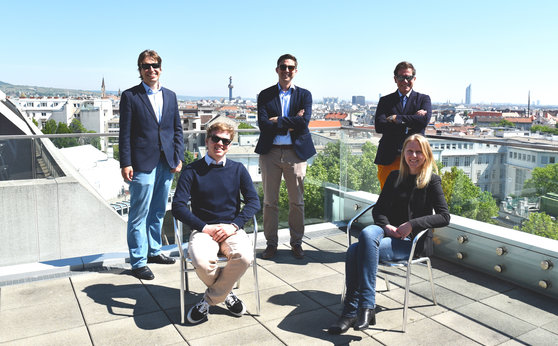
Proxygen GmbH – a new CeMM spin-off company
On 18 May 2020, Proxygen GmbH, a startup company by CeMM, the Research Center for Molecular Medicine of the Austrian Academy of Sciences, Georg Winter, Giulio Superti-Furga, Stefan Kubicek and Matthias Brand has been founded. Proxygen GmbH will develop therapies against cancer and other life-threatening diseases by reprogramming the cellular protein quality control system. Proxygen is focused on particular small molecules called “molecular glue…
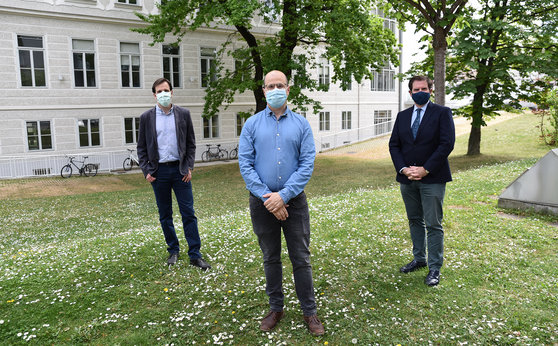
Missing component of innate immune signaling identified
How cells recognize pathogens and alert the immune system swiftly is a fundamental process of high importance for the survival of any species, including humans. A key role is ascribed to so-called adapters, that equal little molecular platforms inside cells where signals from pathogen detectors are integrated for safety and accuracy and conveyed to lasting signals leading to the activation of the major “red alarm” genes, like interferons.…
