


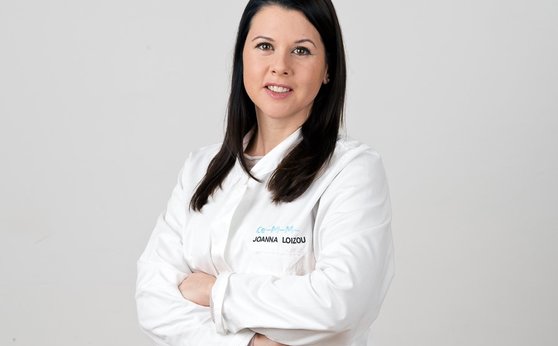
Joanna Loizou awarded the prestigious Mannagetta Prize of the Austrian Academy of Sciences
CeMM congratulates Adjunct Principal Investigator Joanna Loizou on being awarded the Mannagetta Prize of the Austrian Academy of Sciences for her remarkable research work in the field of genome stability in oncology. In 2021, the Johann Wilhelm Ritter von Mannagetta Award for Medicine is given for outstanding work investigating the mechanisms of cancer genesis. Understanding complex systems to pave the way for better cancer treatment is the goal…
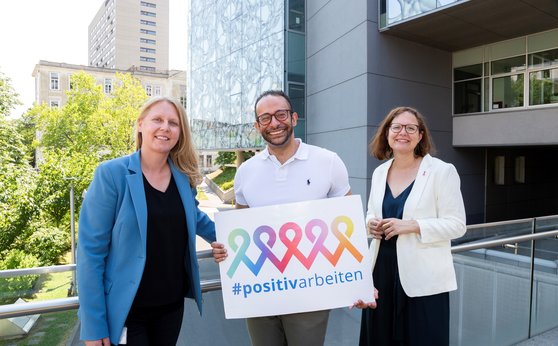
CeMM signs the #positivarbeiten declaration to promote inclusion towards HIV-positive employees
Diversity, professionalism, and respect are core values at CeMM, we actively promote respectful cooperation in an open and inclusive workplace. On 28 June 2021, the signing of the #postivearbeiten declaration took place at CeMM, symbolizing yet another step forward in our continuous commitment to provide all our employees with an optimal work environment where they can develop themselves and contribute to CeMM’s success in the field of medical…
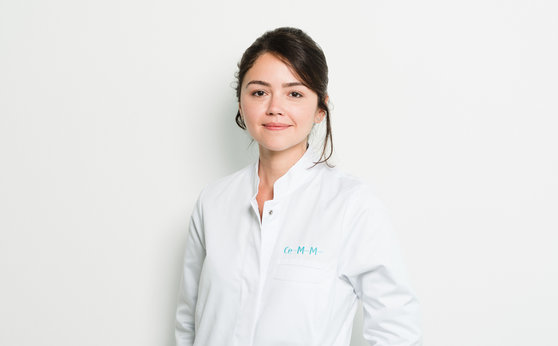
New CeMM Principal Investigator Clarissa Campbell
On 1 July 2021, Clarissa Campbell joins CeMM, the Research Center for Molecular Medicine of the Austrian Academy of Sciences, as new Principal Investigator. She focuses on intestinal pathogens and intestinal immune homeostasis, thus strengthening CeMM’s core expertise in the fields of immunity and metabolism. Clarissa Campbell studied biology with a minor in genetics at the Federal University of Rio de Janeiro (UFRJ), and subsequently earned a…
Do you speak immunology? A new language for congenital immune disorders
A detailed vocabulary to identify and explore rare, congenital immune disorders around the world? That is exactly what is now available thanks to a new study led by the Ludwig Boltzmann Institute for Rare and Undiagnosed Diseases in Vienna and the University Medical Center Groningen. Congenital immune disorders often affect only a handful of children around the world. The now published expansion of the nomenclature allows us to better analyze,…
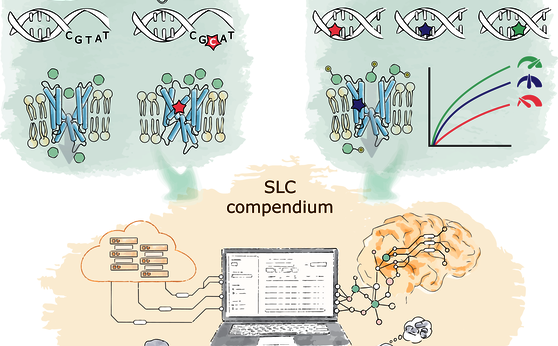
REsolution: opening the gates for new medicines
The new REsolution consortium is a public-private research partnership, supported by the Innovative Medicines Initiative (IMI), with nine partners from academia and the pharmaceutical industry. Starting on June 1, 2021 and with a duration of 2 years, the project aims to understand how genetic variants in humans affect the function of hundreds of cellular transporters. How do molecules such as vitamins, nutrients and drugs enter our organs and…
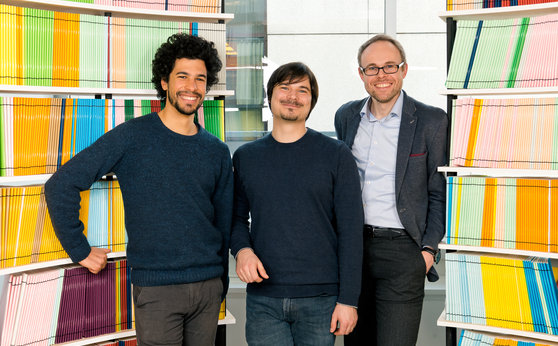
Scientists develop “scifi-RNA-seq” method for ultra-high-throughput RNA sequencing in single cells
Molecular analysis of single cells provides an important basis for precision medicine. Five years ago, scientists around the world came together to pursue the “Human Cell Atlas” project, with the aim of cataloging all cells in the human body. These data have helped, for example, to identify those cell types that the coronavirus can infect particularly well. To accelerate and improve the creation of such cell catalogs, Paul Datlinger and André F.…
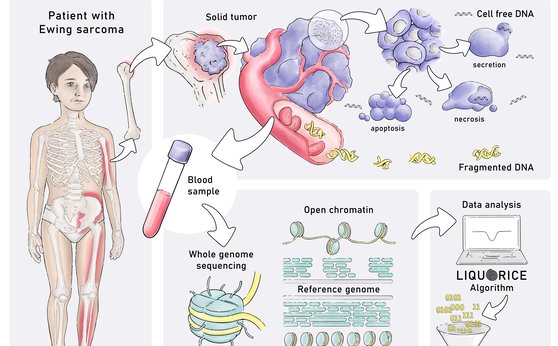
Blood test detects childhood tumors based on their epigenetic profiles
A new study exploits the characteristic epigenetic signatures of childhood tumors to detect, classify and monitor the disease. The scientists analyzed short fragments of tumor DNA that are circulating in the blood. These "liquid biopsy" analyses exploit the unique epigenetic landscape of bone tumors and do not depend on any genetic alterations, which are rare in childhood cancers. This approach promises to improve personalized diagnostics and,…
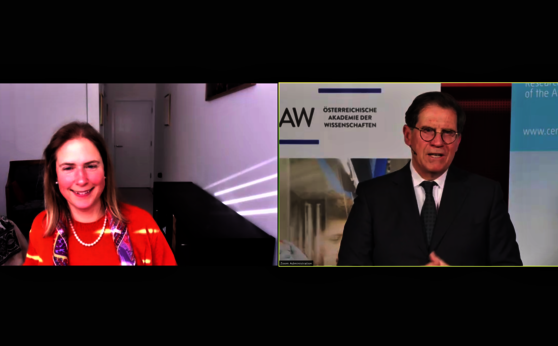
14th CeMM Landsteiner Lecture by Sarah Teichmann and the 2020 Denise P. Barlow Award Ceremony
The 14th Landsteiner Lecture was held virtually on 10 May 2021 by Sarah Teichmann, Head of Cellular Genetics at the Wellcome Sanger Institute (UK), with a special focus on the Global Human Cell Atlas Consortium, which she co-founded in 2016. The CeMM Landsteiner Lecture series is named in honor of Karl Landsteiner, the Viennese scientist who was awarded the Nobel Prize for discovering blood groups. The invited speakers, carefully selected by…
Do purines influence cancer development?
Numerous disease development processes are linked to epigenetic modulation. One protein involved in the process of modulation and identified as an important cancer marker is BRD4. A recent study by the research group of Giulio Superti-Furga, Principal Investigator and Scientific Director at the CeMM Research Center for Molecular Medicine of the Austrian Academy of Sciences, now shows that the supply of purines as well as the purine synthesis of a…
10th CeMM S.M.A.R.T. Lecture with Prof. Orly Goldwasser
On 27 April 2021, CeMM hosted its 10th S.M.A.R.T. Lecture with Orly Goldwasser, Professor of Egyptology at the Hebrew University of Jerusalem and an Honorary Professor at the University of Göttingen. The S.M.A.R.T. lecture series is an initiative launched by CeMM dedicated to diverse topics around the fields of science, medicine, art, research, and technology. They address contemporary challenges of science in an interdisciplinary manner and at…
VR visualization supports research on molecular networks
Networks offer a powerful way to visualize and analyze complex systems. However, depending on the size and complexity of the network, many visualizations are limited. Protein interactions in the human body constitute such a complex system that can hardly be visualized. Jörg Menche, Adjunct Principal Investigator at the CeMM Research Center for Molecular Medicine of the Austrian Academy of Sciences, Professor at the University of Vienna and…
Immune cells out of control: how lethal hyperinflammation emerges from a novel gene defect
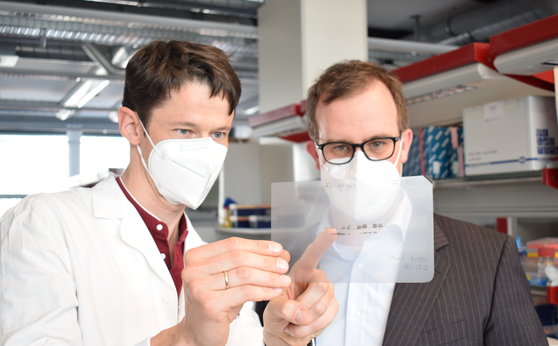
Scientists from CeMM Adjunct PI Kaan Boztug's Group at St. Anna Children's Cancer Research Institute, together with their collaborators from Finland and Sweden, discover a novel subtype of a genetic disease: genetically determined deficiency of the protein RhoG abrogates the normal cytotoxic function of specific immune cells, causing hemophagocytic lymphohistiocytosis (HLH). These new findings may help with the genetic diagnosis for patients with…

New sponsored chairs arrived at the CeMM terrace
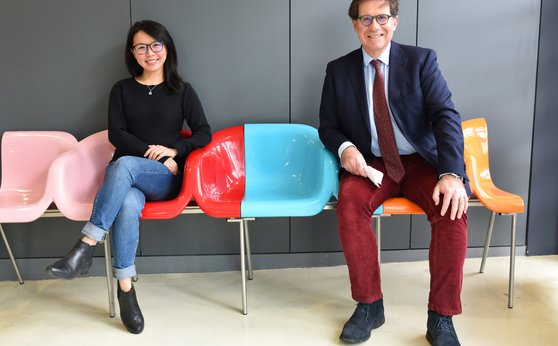
After 10 years in the CeMM building, we have made some renovations in the cafeteria and our iconic terrace overlooking Vienna’s historical center. Despite the challenging times we are living, it is a priority for CeMM to provide an inviting and comfortable space for safe interactions and cooperation not only among our colleagues but also our guests. At the end of 2020, we launched the “One Chair One for CeMM” fundraising campaign to help support…
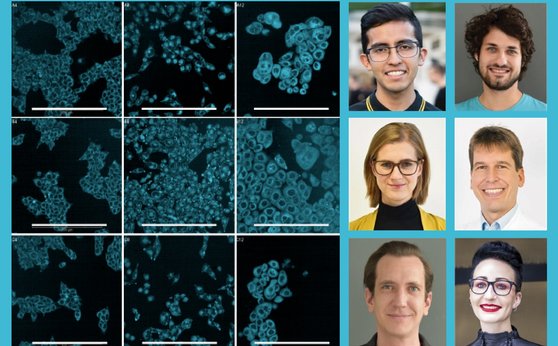
Successful collaboration among 3 CeMM groups results in the development of a novel synthesis for the quinoxaline functional group
The discipline of chemistry deals with understanding (analysis) and making and transforming (synthesis) of matter. The size-range with which chemistry is most concerned with is that of molecules as building blocks of matter. Molecules are nothing but connected atoms, and when aiming at making, i.e. synthesizing, them, it is useful to chemists to subdivide them into subsets, which are so-called "functions" or "functional groups". Although every…
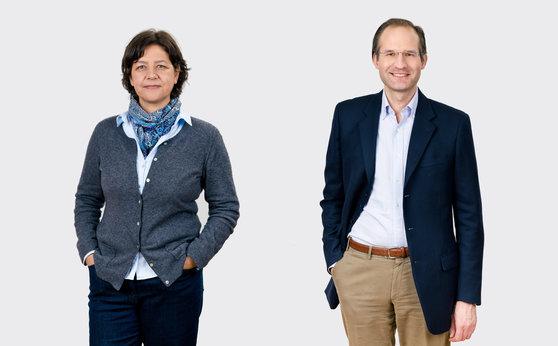
CeMM bids farewell to Sylvia Knapp and Christoph Binder
Sylvia Knapp and Christoph Binder have been CeMM pioneers and have been associated with their groups with us for 15 years. On 31 March 2021 their CeMM research contracts end and we would like to say a big heartfelt thank you for the scientific contributions, the networking and personal engagement. Both joined CeMM at the first round of Principal Investigator hiring and have been critical in setting the stage for future directions and hires at…
