


ÖAW President Heinz Faßmann visits CeMM
We had the honor to welcome Prof. Heinz Faßmann, President of the Austrian Academy of Sciences at CeMM! This is his first visit since he became ÖAW President in July this year, and it was a good meeting to present the institute, our research efforts and the innovation carried out by our scientists. President Faßmann was welcomed by CeMM Scientific Director Giulio Superti-Furga and Administrative Director Anita Ender, who guided him through the…

Preventing resistance in cancer therapy
The latest developmental drugs, particularly for the use in oncology, rely on the targeted degradation of harmful pathogenic proteins. In a recent study, researchers at CeMM, the Research Center for Molecular Medicine of the Austrian Academy of Sciences, and the University of Dundee (UK) identify potential resistance mechanisms and provide insights on how to overcome them. Traditional targeted cancer therapies mainly rely on drugs that bind…

3rd REsolution and 7th RESOLUTE Consortia Meetings
From October 19 and 20-21, 2022, the consortia meetings of REsolution and RESOLUTE took place in Berlin. The event, hosted by Bayer, gathered 60 international participants. The REsolution and RESOLUTE consortia are public-private research partnerships supported by the Innovative Health Initiative (IHI), the European Union and EFPIA, coordinated by CeMM and Pfizer, and with partners from academia and the pharmaceutical industry. The RESOLUTE…
Skin microbiome identified as factor in stem cell transplants
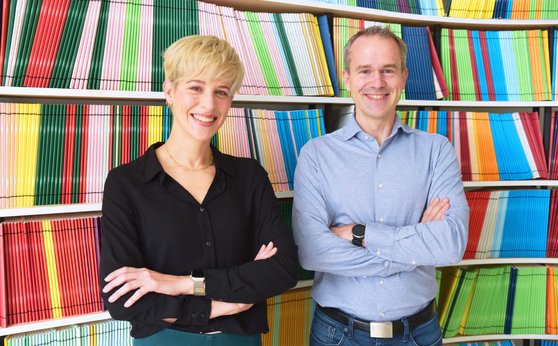
Organ damage occurs in up to 70 percent of patients in the first few months following stem cell transplant. The precise reasons for this potentially life-threatening reaction have long been the subject of scientific research. Researchers led by CeMM Adjunct Principal Investigator Georg Stary from the Department of Dermatology at MedUni Vienna and Vienna General Hospital in collaboration with the Ludwig Boltzmann Institute for Rare and…
A simple online calculator detects liver cirrhosis patients at high risk for clinical complications
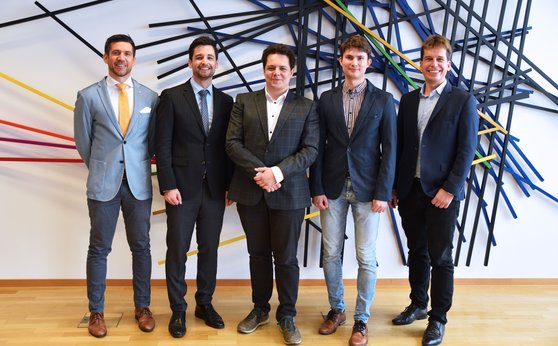
Researchers at CeMM, the Medical University of Vienna (MedUni Vienna), and the Ludwig Boltzmann Institute for Rare and Undiagnosed Diseases (LBI-RUD) joined efforts to use their expertise in machine learning and management of patients with cirrhosis to develop a non-invasive algorithm that can help clinicians to identify patients with cirrhosis at highest risk for severe complications. Cirrhosis develops in response to repeated injury to the…
Study demonstrates for the first time that ticks weaken skin's immune response
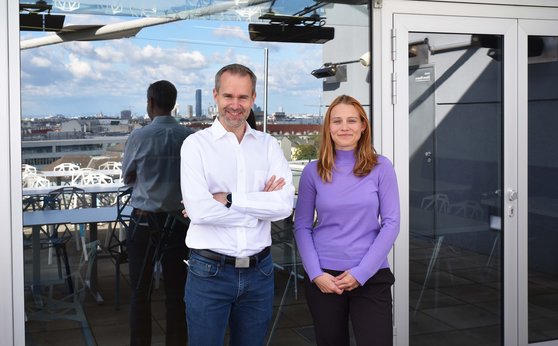
Hitherto, scientists have not fully understood why ticks are such dangerous disease vectors. A research team led by Johanna Strobl and CeMM Adjunct Principal Investigator Georg Stary from MedUni Vienna's Department of Dermatology shows that tick saliva inhibits the skin's defence function, thereby increasing the risk of diseases such as tick-borne encephalitis (TBE) or Lyme disease. The study was recently published in the Journal of Clinical…
New CeMM Principal Investigator Laura de Rooij
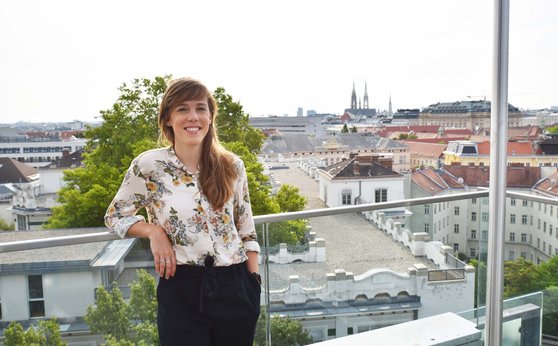
On September 1, 2022, Laura de Rooij joined CeMM as a new Principal Investigator. Laura de Rooij will combine wet and dry lab biology to decipher the role of circulating endothelial cells (CECs) in human blood. Her research will advance the understanding and highlight the potential of this cell type in the treatment of age-associated diseases, expanding, thus, CeMM’s expertise in the field of aging. The rare circulating endothelial (progenitor)…
SMNDC1 loss induces alpha cells to produce insulin
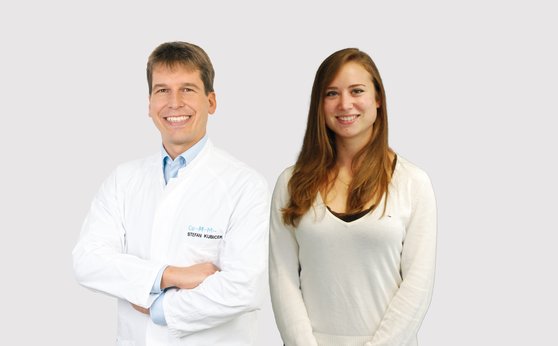
Beta cells in the pancreas are responsible for producing the vital hormone insulin. In diabetes, these cells are either destroyed or functionally impaired, resulting in elevated blood sugar levels in the body. Researchers led by Principal Investigator Stefan Kubicek at CeMM, the Research Center for Molecular Medicine of the Austrian Academy of Sciences, have now shown that alpha cells, which are also located in the pancreas, can be stimulated to…
RESOLUTE and REsolution provide new resources to empower research on human transporters
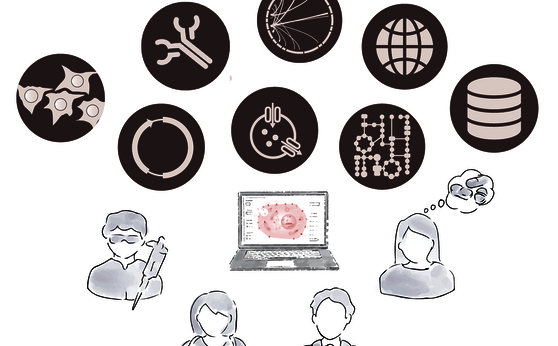
Humans need to eat to survive. Our cells acquire nutrients from food, such as vitamins, sugars and proteins, to grow, duplicate and exert their functions. But how do these nutrients enter our cells? Solute carriers (SLCs in short) are proteins that are located on cell membranes and regulate the traffic of all kind of chemical matter. They constitute the largest family of transporters in the human genome and are associated with many diseases,…
Receptor FIBCD1 newly identified in neuro-developmental disorders
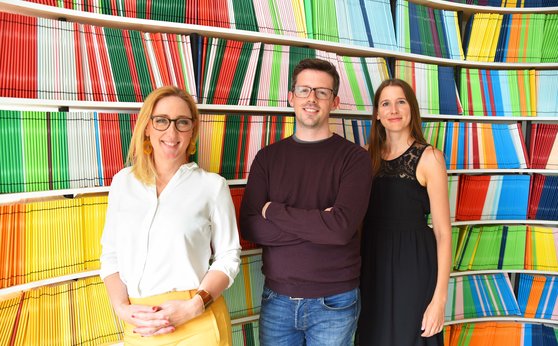
A multidisciplinary study led by Vanja Nagy (LBI-RUD/CeMM/Medical University of Vienna) and Josef Penninger (UBC/IMBA) characterized a novel gene, known as FIBCD1, to be likely causative of a new and rare neurodevelopmental disorder. Using data from two young patients with neurological symptoms, the researchers from both groups found evidence of a novel function for the FIBCD1 gene in the brain, and a potentially pivotal role in diseases such as…
Study confirms accuracy of national virus variant monitoring of wastewater
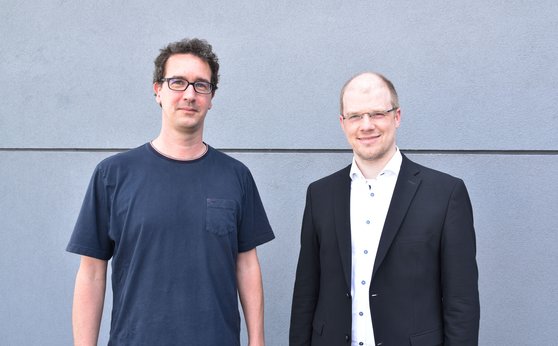
Since 2020, Austria has played an internationally pioneering role in monitoring the COVID-19 pandemic by sequencing virus particles from wastewater samples. A recent study by CeMM Research Center for Molecular Medicine of the Austrian Academy of Sciences, the Medical University of Vienna, the University of Innsbruck, and many other collaboration partners now demonstrates unprecedented detail and accuracy when it comes to analyses of how…
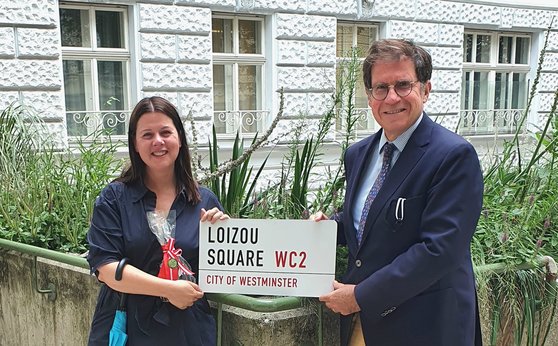
CeMM Adjunct PI Joanna Loizou will join AstraZeneca
Joanna Loizou, one of the Principal Investigators who helped establish CeMM from 2011 to 2020, is leaving Vienna to join AstraZeneca. After her full engagement at CeMM, in 2020 Joanna Loizou became group leader at the Medical University of Vienna while remaining a CeMM Adjunct PI. CeMM congratulates Joanna on her new position as Director in the Translational Medicine Department at AstraZeneca in Cambridge, UK. After her significant fundamental…
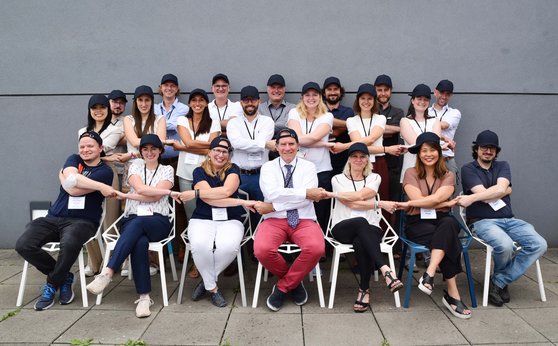
2nd REsolution Consortium Meeting
On 20 June 2022, the REsolution consortium held its second consortium meeting, which was the first one in person since the project started. The event took place at CeMM with 20 participants coming from different countries. The REsolution consortium is a public-private research partnership supported by the Innovative Medicines Initiative (IMI), the European Union and EFPIA, with nine partners from academia and the pharmaceutical industry. With a…
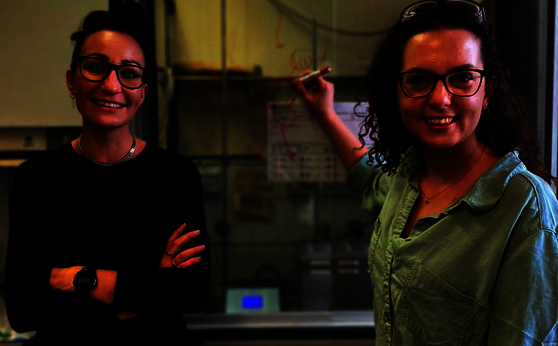
Catalyst from hot water
The research group of chemist Miriam Unterlass, CeMM Adjunct Principal Investigator and professor the University of Konstanz, succeeded in producing organic and inorganic substances in a single process using an environmentally friendly method. The production of chemical substances normally requires environmentally harmful solvents. After the research group of Miriam Unterlass, professor of Solid State chemistry at the University of Konstanz and…
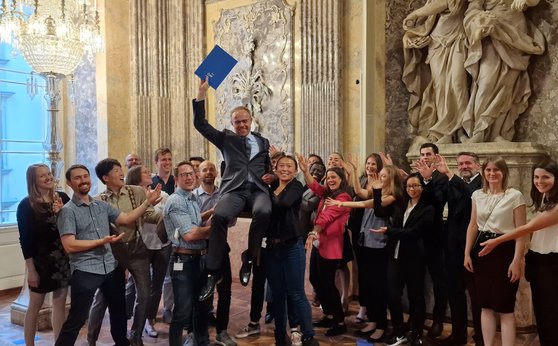
Christoph Bock received the prestigious Erwin Schrödinger Award of the Austrian Academy of Sciences
CeMM congratulates Principal Investigator Christoph Bock on being awarded the Erwin Schrödinger Award of the Austrian Academy of Sciences (ÖAW) for his pioneering achievements in the field of single-cell sequencing and epigenetics. The Erwin Schrödinger Award together with the Wilhelm Hartel Prize are the highest prizes awarded annually by the ÖAW. Epigenetics have been one of the main interests of bioinformatician Christoph Bock’s biomedical…
